Human Trafficking & Modern-day Slavery Poverty drives the unsuspecting poor into the
hands of traffickers Published reports & articles from 2000 to 2025 gvnet.com/humantrafficking/Thailand.htm
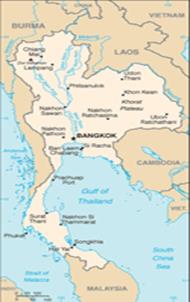
Thailand is a
source, transit, and destination country for men, women, and children
trafficked for the purposes of forced labor and commercial sexual
exploitation. Thailand’s relative prosperity attracts migrants from
neighboring countries and from as far away as Russia and Fiji who flee
conditions of poverty and, in the case of Burma, military repression.
Significant illegal migration to Thailand presents traffickers with
opportunities to force, coerce, or defraud undocumented migrants into
involuntary servitude or sexual exploitation. Following migration to
Thailand, men, women, and children, primarily from Burma, are trafficked for
forced labor in fishing-related industries, factories, agriculture, construction,
domestic work, and begging. Women and children are trafficked from Burma,
Cambodia, Laos, the People’s Republic of China,
Vietnam, Russia, and Uzbekistan for commercial sexual exploitation in
Thailand. Ethnic minorities such as northern hill tribe peoples, many of whom
do not have legal status in the country, are at a disproportionately high
risk for trafficking internally and abroad.
- U.S. State Dept Trafficking in Persons
Report, June, 2009 Check out a later country report here and possibly a full TIP Report here |
|||||||||||
|
CAUTION: The following
links have been culled from the web to illuminate the situation in
Thailand. Some of these links may lead
to websites that present allegations that are unsubstantiated or even
false. No attempt has been made to
verify their authenticity or to validate their content. HOW TO USE THIS WEB-PAGE Students If you are looking
for material to use in a term-paper, you are advised to scan the postings on
this page and others to see which aspects of Human Trafficking are of
particular interest to you. Would you like
to write about Forced-Labor? Debt
Bondage? Prostitution? Forced Begging? Child Soldiers? Sale of Organs? etc. On the other
hand, you might choose to include precursors of trafficking such as poverty and hunger. There is a lot to
the subject of Trafficking. Scan other
countries as well. Draw comparisons
between activity in adjacent countries and/or regions. Meanwhile, check out some of the Term-Paper resources
that are available on-line. Teachers Check out some of
the Resources
for Teachers attached to this website. HELP for Victims International Organization for
Migration ***
FEATURED ARTICLE *** Thai Government and
International Organizations Pledge Cooperation to Provide Assistance to
Victims humantrafficking.org,
News & Updates,
04 June 2007 -- Adapted from: "Trading in People: To
ensure adults and children trafficked in Thailand receive help, state and
international agencies have signed an agreement to not discriminate between
victims." The Bangkok Post (Outlook), 21 May 2007 (edited). (Source:
UNIAP Thailand) www.humantrafficking.org/updates/653 [accessed 29
December 2010] www.pressreader.com/thailand/bangkok-post/20070521/282424164790781 [accessed 19
February 2018] When she finally
managed to escape, she rushed to a policeman for help. But worse was to come.
The woman was deported and was left to find her way home from the Thai
border. Walking through the jungle, she was repeatedly raped by groups of
Karen guerrillas. Traumatised and lost, she was
eventually rescued by a stranger who took her to a refugee camp in Mae Hong
Son, from where she was sent to Suan Prung Mental Hospital in Chiang Mai when camp staff realised she had lost her mind. While poor women
from neighbouring countries enter Thailand in
pursuit of work, many Thai women head overseas for the same reason. And many
end up in similarly hellish conditions, said psychologist Pornsri
Boonthanasathit who has worked with many victims of
human trafficking. The misery of male
slavery - Trafficking of Men in Thailand humantrafficking.org,
News & Updates, 17 May 2007 -- Adapted from: "The misery of male
slavery." The Nation. 14 May 2007 www.humantrafficking.org/updates/636 [accessed 29
December 2010] www.pressreader.com/thailand/the-nation/20070514/281526516623105 [accessed 19
February 2018] The fight against
human trafficking has for more than a decade tried to protect women and
children, often forgetting that men, too, are victims of "new
slavery". The commission
reports that between July 17 and July 19 of 2003, six fishing trawlers with
about 100 crew sailed from Tha Chalom
in Samut Sakhon province
to fish Indonesian territorial waters. Most of the crew were migrant workers
and four were younger than 16. None were allowed home leave for three years.
The trawlers returned to Thailand in July last year. Thirty-eight never
returned, dying on the job. Two were buried on one of Indonesia's myriad
islands and the rest unceremoniously dumped at sea. One more crewmember died
shortly upon his return. Others returned home seriously ill -
emaciated, emotionally disturbed and unable to see, hear or walk properly.
A Samut Sakhon Hospital
medical report diagnosed the men with serious vitamin deficiencies. They had
suffered months without proper food or water, eating only fish. None
have been paid. Yet, they are not considered by law to be victims of human
trafficking. 50 Year Old
Anti-Slavery Law Used in Thailand to Combat Human Trafficking humantrafficking.org,
News & Updates, 17 May 2007 -- Adapted from: "Of human bondage:
After 50 years, the anti-slavery law is finally being enforced." Bangkok
Post. Outlook, 8 May 2007 www.humantrafficking.org/updates/633 [accessed 29
December 2010] www.pressreader.com/thailand/bangkok-post/20070508/282385510079914 [accessed 19
February 2018] Chand was forced to
work from 4am to midnight every day, serving 50-year-old Wipaporn
Songmeesap and her family of six. Instructed never
to leave the house or contact her parents, fear-stricken Chand was only
allowed to eat once or twice a day, unless her boss was angry with her, in
which case she went hungry. When unhappy with her work, Wipaporn would violently beat her with an iron rod or a
belt with a metal buckle, said Chand. She was never sent to the doctor, and
repeated beatings kept opening old wounds, leading to a severe infection. The legal efforts
to take Chand's employer to court for the crime of slavery began two years
ago. In a landmark verdict last month, the Criminal Court sentenced Wipaporn to more than 10 years in jail for abusing Chand
as a slave. The mother of four was also ordered to pay Chand 200,000 baht in
compensation. Despite an appeal by the defendant, history was made. The
country's 51-year-old anti-slavery law had been enforced for the first time,
paving the way for future cases to tackle human trafficking and slavery. ***
ARCHIVES *** Cleaning Up The
Thai Fishing Industry Matthew Brown, The Borgen Project, 13 March 2021 borgenproject.org/thai-fishing-industry/ [accessed 15 March
2021] POOR WORKING
CONDITIONS
-- Working conditions on Thai fishing vessels are notoriously challenging. In
multiple reports, workers discuss working 18-20 hour days with inadequate
food, water and medical supplies. Between 14% and 18% of migrants report
being victims of forced labor. Among these victims of human trafficking, over
half report seeing a coworker killed in front of them. Threats from employers
and beatings are common, along with working at sea for years at a time
without being allowed to leave the vessel. These conditions affect all
nationalities in the Thai fishing industry, but undocumented immigrants are
the most vulnerable to mistreatment. Combating Human
Trafficking In Thailand Celia Brocker,The Borgen Project, 27
November 2020 borgenproject.org/combating-human-trafficking-in-thailand/ [accessed 15 March
2021] CHALLENGES
ELIMINATING HUMAN TRAFFICKING IN THAILAND -- A big part of the country’s prevention
efforts must involve the protection of migrants. Thailand’s population has
about 4.9 million migrants – making up 10% of its workforce – according to
the United Nations. Most individuals migrating to Thailand are from poorer
neighboring countries such as Myanmar and Cambodia, and are, therefore, more
vulnerable to trafficking. The country passed
The Royal Ordinance on Management of Migrant Workers in March 2018, which
requires employers to cover recruitment fees and transportation costs for
migrant workers in Thailand. These transportation finances include the
arrival and return home of employed migrant workers. However, the
country has not defined or enforced the regulations on these fees well. Texas woman
sentenced for role in international human trafficking operation with location
in Minneapolis Charlie Wiese,
KSTP-ABC Eyewitness News, 17 September 2020 [accessed 18
September 2020] As proven during a
six week trial and conviction by a federal jury, Wanless
participated in a sex trafficking organization that coerced hundreds of women
from Bangkok, Thailand to engage in commercial sex acts in cities around the
United States, including Minneapolis. The trafficking
victims were forced to participate in the scheme through misleading claims of
a better life in the United States. Once in the United States, the victims
were sent to houses for prostitution. The victims were
isolated from the outside world, and their families in Thailand were
threatened, according to the release. U.S. urged to
downgrade Thailand in annual human trafficking report Nanchanok Wongsamuth,
Thomson Reuters Foundation, 10 March 2020 news.yahoo.com/u-urged-downgrade-thailand-annual-000000841.html [accessed 11 March
2020] Last year, Thailand
was ranked as a Tier 2 country - above the lowest ranking of Tier 3 - in the
U.S. State Department's closely watched Trafficking in Persons (TIP) report,
which noted that the country was making significant efforts to combat the
crime. But in a separate
report, the SWG called on the U.S. to place Thailand on its Tier 2 Watch
List, a category denoting nations that have not fully met the minimum
standards for the elimination of trafficking and deserve special scrutiny. The Thai government
had made no progress in key areas, including the number of forced labour cases, labour
inspections, assisting potential victims of trafficking, as well as
addressing widespread debt bondage and the withholding of workers' travel
documents, the report said. The government had
failed to protect workers and labour rights
defenders who report abuse from retaliation, while migrant workers still do
not have the legal right to organise and bargain
collectively for better conditions, it added. Record number of
trafficking victims in Thailand raises concerns over care Nanchanok Wongsamuth,
Reuters, Bangkok, 6 January 2020 [accessed 7 January
2020] Thailand rescued a
record 1,807 victims of human trafficking last year, according to data that
campaigners on Monday said raised concerns about the nation’s ability to
support survivors. About 60% of those
rescued last year were women and most were labor trafficked. Nearly
three-quarters of them were Burmese migrants bound for neighboring Malaysia,
police said. Those who are identified
as trafficking victims can choose to receive help from the government, which
includes staying at a shelter and being compensated through a state fund that
provides living and rehabilitation expenses in addition to lost wages. Thailand needs
neighbors' help to crack down on slavery at sea: activist Nanchanok Wongsamuth,
Reuters, London, 4 June 2019 [accessed 11 June
2019] Thailand’s
crackdown on exploitation and slavery in its multi-billion dollar fishing
industry will only succeed if its neighbors step up and adopt
anti-trafficking laws, said a labor rights activist and Nobel Peace Prize
nominee. Thai fishing
vessels are increasingly registering in nearby
countries to avoid scrutiny of their treatment of migrant workers as Thailand
boosts its laws on human trafficking, said local campaigner Patima Tungpuchayakul. Unlike Thai boats,
foreign vessels are not required to undergo checks by officials when they
enter or leave ports in Thailand, said the activist, who featured in a 2018
documentary ‘Ghost Fleet’ about workers trapped in slavery in the industry. 2020 Country
Reports on Human Rights Practices: Thailand U.S. Dept of State Bureau of Democracy, Human Rights, and
Labor, 30 March 2021 www.state.gov/reports/2020-country-reports-on-human-rights-practices/thailand/
[accessed 28 June
2021] PROHIBITION OF
FORCED OR COMPULSORY LABOR There were reports
that forced labor continued in fishing, shrimp, garment production,
agriculture, domestic work, and begging. Labor rights groups
reported that some employers utilized practices indicative of forced labor,
such as seeking to prevent migrant workers from changing jobs or forcing them
to work by delaying wages, burying them in debt, or accusing them of
theft. NGOs reported cases where
employers colluded to blacklist workers who reported labor violations, joined
unions, or changed jobs. The government and
NGOs reported trafficking victims among smuggled migrants, particularly from
Burma. Most of those cases involved
transnational trafficking syndicates both in Thailand and in the country of
origin. Many victims were subjected to
deception, detention, starvation, human branding, and abuse during their
journey. Traffickers sometimes
destroyed the passports and identity documents of victims. Some victims were sold to different
smugglers and subjected to debt bondage. PROHIBITION OF CHILD
LABOR AND MINIMUM AGE FOR EMPLOYMENT NGOs, however,
reported that some children from within the country, Burma, Cambodia, Laos,
and ethnic minority communities were working in informal sectors and small
businesses, including farming, home-based businesses, restaurants, street
vending, auto services, food processing, construction, domestic work, and
begging. Some children were forced to
work in prostitution, pornography, begging, and the production and
trafficking of drugs (see section 6, Children). Freedom House
Country Report 2020 Edition freedomhouse.org/country/thailand/freedom-world/2020 [accessed 7 May 2020] G4. DO INDIVIDUALS
ENJOY EQUALITY OF OPPORTUNITY AND FREEDOM FROM ECONOMIC EXPLOITATION? Exploitation and
trafficking of migrant workers (estimated between 4 and 5 million) and
refugees from Myanmar, Cambodia, and Laos are serious and ongoing problems,
as are child and sweatshop labor. Sex trafficking remains a problem in which
some state officials are complicit. However, the government has made some
efforts to prosecute and seize the assets of those suspected of involvement
in human trafficking, including police officers and local officials. Thai companies
facing criticism for human rights violations, labor rights abuses, and
migrant rights violations continue to file libel lawsuits against activists
and human rights defenders. The poultry company Thammakaset
in recent years has filed more than 20 criminal and civil complaints against
journalists, human rights defenders, former employees of the company, and
staff of nongovernmental organizations. 2017 Findings on
the Worst Forms of Child Labor Office of Child
Labor, Forced Labor, and Human Trafficking, Bureau of International Labor
Affairs, US Dept of Labor, 2018 www.dol.gov/sites/default/files/documents/ilab/ChildLaborReport_Book.pdf [accessed 22 April
2019] www.dol.gov/sites/dolgov/files/ILAB/child_labor_reports/tda2017/ChildLaborReportBook.pdf [accessed 7 May
2020] Note:: Also check out this country’s report in the more recent edition DOL
Worst Forms of Child Labor [page 944] Thai Children, as
well as children from Burma, Laos, and Cambodia are exploited for commercial
sexual exploitation in Thai massage parlors, bars, karaoke lounges, hotels,
and private residences. In addition, children are lured, including through
the internet and social media, and coerced to produce pornography and perform
sexual acts for live internet broadcasts. (12; 37; 38; 39; 4; 40; 3; 41; 42) Children,
particularly migrants from the Greater Mekong Sub-region, engage in hazardous
work in shrimp and seafood processing. While incidents of child labor in shrimp
and seafood processing have declined in recent years, children are still
reported to work in the industry. (43; 16) Children who work in shrimp and
seafood processing clean and lift heavy loads of seafood and work late hours.
Many of these children also experience health problems, including injuries
and chronic diseases. (6; 18; 1). Thai fishing
industry turns to trafficking: 'We witnessed girls being raped again and
again' Chris Kelly, Annie
Kelly, Claudine Spera, Irene Baqué,
Mustafa Khalili & Lucy Lamble, theguardian.com,
20 July 2015 [accessed 20 Ju;y 2015] One year on from
the Guardian's expose of slave labour in the supply
chain of Thai prawns sold in supermarkets across the world, a new
investigation has linked Thailand's fishing industry with the vast
transnational trafficking syndicates profiting from the misery of some of the
most persecuted people on earth. Hundreds of Rohingya
migrants were sold from jungle camps on to Thai fishing boats producing
seafood sold across the globe. As Thailand's fishing sector faces crisis,
fishermen are also moving closer to the traffickers, converting their boats
to carry people and facilitating huge off-shore trafficking camps. Thai police find
second human trafficking camp Kocha Olarn
& Don Melvin, CNN, 5 May 2015 www.cnn.com/2015/05/05/world/thailand-human-trafficking-camp/index.html [accessed 19 May
2015] Thai police said
Tuesday they had found a second camp used for human trafficking and had
discovered three trafficking victims hiding in it. The camp is close
to one discovered last week in which Thai authorities said they found the
remains of at least 26 people along with one survivor who had to be
hospitalized. Group: Trafficking
out of control - The advocacy organization Human Rights Watch has said that
human trafficking is out of control in Thailand. It said the dead at the
first camp, which was found Friday, were Rohingya
Muslims from Myanmar or Bangladesh. Police, NGO say
deaths were from disease, not violence - In a statement last week, Human
Rights Watch said the dead found at the first camp had "starved to death
or died of disease while being held by traffickers who were awaiting payment
of ransoms." Illegal
Immigrant–Beggars Found To Be Human Trafficking Victims Pattaya Daily News, 26 May
2009 www.pattayadailynews.com/pattaya-news/illegal-immigrant-%E2%80%93beggars-found-to-be-human-trafficking-victims/ [accessed 22 August 2014] After the
investigation and related research concerning the gang of Cambodians from
Vietnam who had been sneaking illegally into Pattaya
of late, Mr. Supakorn Noja
aka “ Kroo Ja” said that
the officials had learned that many of the women were not even the real
mothers of the children. The true scenario was, in fact, more like a human
trafficking operation, which has been on the rapid increase. Most of them, it
transpired, had been lured into the unfortunate situation by Thai gangs. When
they were arrested, the Thai operators were easily able get away with their
crimes by negotiating with the police. These human trafficking operations are
increasingly giving Pattaya a really bad
reputation. The child beggars,
when questioned, said they were brought out of a house in the Banglamung area at around 7.00 pm and were forced to beg
for money until dawn. They had to make between 500-1000 baht per night. If
they could not make it, they would be punished by being hit with sticks or
denied food. Thai woman jailed
for 14 years for human trafficking Agence France-Presse AFP, Bangkok, 17 Jun 2008 www.traffickingproject.org/2008/06/thai-woman-jailed-for-14-years-on.html [accessed 18
February 2015] news.abs-cbn.com/world/06/17/08/thai-woman-jailed-14-years-human-trafficking [accessed 7 May
2020] [name
withheld]
from Thailand's poor northeast, lured two women in their 20s and 30s from her
hometown with the promise of work in her daughter's restaurant, a statement
from the Fight Against Child Exploitation (FACE) said. But when the two women arrived in Italy via
France in 2005, they were told no jobs were available at the restaurant and
they had to work as prostitutes to repay the money Jomsri
lent to them to travel to Europe. Greater
Public-Private Collaboration Required to Combat Human Trafficking Washington, 9 June
2008 /PR Newswire-US Newswire/ -- Source: Vital Voices Global Partnership finance.boston.com/boston/news/read/5690654/greater_public [accessed 23 June
2013] www.prnewswire.com/news-releases/greater-public-private-collaboration-required-to-combat-human-trafficking-57425757.html [accessed 5 October
2016] Vital Voices is
pleased to see the report's coverage of the dire situation confronting
stateless people in northern Thailand. In July 2007, Vital Voices released a
report, "Stateless and Vulnerable to Human Trafficking in
Thailand," detailing the legal and practical barriers to the tribal
people in northern Thailand and their vulnerability to human trafficking. Due
to their lack of citizenship, the stateless often fall victim to trafficking
and receive little to no assistance or protection. Stateless And
Vulnerable To Human Trafficking In Thailand [PDF] Vital Voices Global
Partnership, June 2007 www.humantrafficking.org/uploads/publications/Vital_Voices_Stateless_and_Vulnerable_to_Human_Trafficking_in_Thailand.pdf [accessed 23 June
2013] [accessed 7 May
2020] EXECUTIVE SUMMARY -
LEGAL FRAMEWORK
- Despite the international prohibition and Thailand's legal commitment to
eliminate trafficking within and across its borders, the country remains a
favored source, transit and destination country.37 In part, trafficking continues
to thrive because its root causes have not been addressed. According to
"studies by the United Nations Educational, Scientific
and Cultural Organization . . . lack of proof of citizenship is the
single greatest risk factor for a hill tribe girl or woman to be trafficked
or otherwise exploited."38 The challenge of obtaining citizenship,
especially for those in the northern hill tribes, directly impacts an
individual's ability to access state services and opportunities. Without
access to state services like education and healthcare, the stateless people
become more vulnerable to trafficking, the black-market and exploitation. Education may
prevent human trafficking Casey Northcutt, The
Murray State News, February 21, 2008 At one time this
article had been archived and may possibly still be accessible [here [accessed 28 August
2011] Hundreds of
thousands of men and women in northern Thailand are captured each year and
forced to work in farms, sweatshops and brothels, according to
Humantrafficking.org. Malarin Visetrojana, English as
a Second Language student from Bangkok, Thailand, said children especially
are captured by this trap. In the rural northern regions, many families are
so poor that instead of sending their children to school, they send them to
cities to work as servants for the rich. Sometimes, "middlemen"
approach a child's parents, pretending to represent a wealthy family in
search of help. "They know that
the children will go to work as servants or as housemaids for big
families," Visetrojana said. "They don't
know that their children will be prostitutes." New law on
trafficking Pennapa Hongthong,
The Nation, October 1, 2007 nationmultimedia.com/2007/10/01/national/national_30050827.php [accessed 29
December 2010] www.pressreader.com/thailand/the-nation/20071001/281483567010414 [accessed 19
February 2018] Eaklak said regional bus
terminals were places where crime syndicates trafficked
Thai men into the fishing industry. He said many men and male teenagers had
been drugged unconscious while waiting for buses at terminals - then woke up
to find themselves on a fishing boat in the middle of an ocean. "They have no way to escape, and must
work in a boat until the time it goes ashore." Eaklak said that over the
past four years his centre had helped rescue 19 men
trafficked to work on fishing boats.
He believed the number of men trafficked to work on fishing boats must
be in the thousands. That estimate, he said, was based on the number of
fishing boats operating beyond Thai waters - more than 1,000 - and the fact
each has about 30-40 workers. Eaklak said trafficking
within Thailand to exploit workers existed not because there was no law
against it, but because corrupt influential figures were involved in
trafficking. He said the country already had a law to control labour on fishing boats, however its implementation was
crippled by corrupt state officials, who allowed these operations to exist. Authorities Rescue
Abused Foreign Youth Workers From Chonburi Hell
Factory Pattaya Daily News, 13 July
2007 www.pattayadailynews.com/pattaya-news/authorities-rescue-abused-foreign-youth-workers-from-chonburi-hell-factory/ [accessed 22 August
2014] teakdoor.com/thailand-and-asia-news/15768-pattaya-police-rescue-foreign-youth-workers.html [accessed 7 May
2020] At the factory, the
police team found over 20 foreign children, aged between 12 and 17, working
under intolerable conditions as vegetable oil fillers, and effectively
imprisoned on the premises. Apparently, the Women Foundation had previously
helped four young Lao children, aged between 12 and 15, that had successfully
escaped from the factory, who had reported that they were forced to work long
hours and were abused. Fifteen Year Old
Girl Forced into Slavery Pattaya Daily News, 19 May
2007 teakdoor.com/thailand-and-asia-news/13881-pattaya-15-year-old-girl-forced.html [accessed 29
December 2010] Miss Leena reported
that a Khmer man told her that if she came to Pattaya
to be a salesgirl, she could earn an income at least 10,000 baht Soi a month. However, she had pay
a 2,500 baht fee for entering the country. If she did not have the money, she
could come to work first and the fee would be deducted from her income. She
believed the man and followed him to Thailand by sneaking through the border
at Sa-Kaew province. Then, Mrs. Tor Chan Thy (31),
a Khmer citizen, took over and brought her to Pattaya
to sell toys. She let her stay on the third floor, room No. 307, of Surat
Apartment, Pornpraphanimitr, Moo 5, Nongprue, Banglamung.
After ten days,
Miss Leena realized that she was cheated because she never received any
money. She had only three meals a day if she met her quota of 1,000 baht. If
she did not earn at least 1,000 baht per day, she was scolded, beaten up and
not given food. She could not stand the situation. So, she managed to escape
and seek help. Human-Trafficking
Of Children In Tak Province Pattaya Daily News, 29
March 2007 www.oldpdn.com/shownews.php?IDNEWS=0000002625 [Last accessed 29
December 2010] On a monthly basis,
a small number of children vanish. These children, according to Thongsuk, are forced into working as beggars, labourers and prostitutes in Malaysia, Bangkok and Nakhon
Sawan. It has also been reported that the children
are badly maltreated by those who employ them, even giving them electric
shocks if they don’t bring in sufficient money from begging. Some of the schemes
that the immigrants perpetrate are: selling their children, luring some away
and stealing others, even hiring out babies for 20 Baht daily to be used as
fronts for begging. Human trafficking
helps spread HIV/AIDS in Asia: UN Ranga Sirilal,
Reuters, Colombo, 22 Aug 2007 www.reuters.com/article/idUSL22325220070822 [accessed 29
December 2010] "Trafficking
... contributes to the spread of HIV by significantly increasing the
vulnerability of trafficked persons to infection," said Caitlin Wiesen-Antin, HIV/AIDS regional coordinator, Asia and
Pacific, for the United Nations Development Programme
(UNDP). "Both human trafficking
and HIV greatly threaten human development and security." Major human
trafficking routes run between Nepal and India and between Thailand and neighbors like Laos,
Cambodia and Myanmar. Many of the victims are young teenage girls who end up
in prostitution. "The link
between human trafficking and HIV/AIDS has only been identified fairly
recently," Wiesen-Antin told the International
Congress on AIDS in Asia and the Pacific. More action urged
against slave labour Bangkok Post, 18
July 2007 bkkintra.iom-seasia.org/modules.php?op=modload&name=News&file=article&sid=1800&mode=thread&order=0&thold=0 [access date
unavailable] Labour advocates are
demanding more action to safeguard job seekers against being lured into
virtual slavery on fishing trawlers. Ekkaluck Lumchumkhae, chief of the Mirror Foundation's missing persons information centre, said
human trafficking gangs were still active in the country because the
responsible agencies were not doing what they should do. Since the centre's establishment four years ago, around 800 people
have been reported missing in the country, of which 19 were believed to have
been deceived into working on sea-going trawlers, Mr
Ekkaluck said. A labour agent earns 3,000-5,000 baht per head from
unscrupulous fishing trawler operators if they mange
to lure a young male to work on board a vessel, he said. Ethnic Hill-Tribe
Children Learn about the Dangers of Trafficking humantrafficking.org,
17 May 2007 -- Adapted from: "Course to save hilltribe
girls from flesh trade" Bangkok Post. 8 May 2007 www.humantrafficking.org/updates/634 [accessed 29
December 2010] www.wordsinthebucket.com/thai-hill-tribe-children [accessed 7 May
2020] Chiang Rai governor
Amorphan Nimanant said
his province has become a major transit point for human trafficking because
of its location as it borders Burma and is also very close to China, where
human trafficking is rampant as well. ''More importantly, people were still
poor, deeper in debt, and had no access to proper education, which would only
worsen the situation,'' he said. However, the province is determined to
suppress the problem, he said, adding that a network has been set up to fight
it. Children in danger - Human trafficking suspected as youngsters go missing in Tak's Mae Sot district Anan Paengnoy, The Nation, March 26, 2007 At one time this
article had been archived and may possibly still be accessible [here] [accessed 12 September
2011] Every month, a few
children go missing from the Muslim Community in Mae Sot district in what
clearly are cases of human-trafficking.
According to local community leaders, these children are sent to
Bangkok, Nakhon Sawan and even Malaysia to be
beggars, workers and prostitutes. Some
children are stolen, others are lured away. Some are sold. Human Trafficking
Racket Being Operated in Southern Thailand Pattaya Daily News, 22
March 2007 www.theforumsite.com/forum/topic/HUMAN-TRAFFICKING-RACKET-BEING-OPERATED-IN-SOUTHERN-THAILAND/132903 [accessed 22 August
2014] Recently, two young
men from Buriram were kidnapped by a trafficking
gang on their first day of arrival in Bangkok, while looking for work. After
being drugged, presumably with something similar to chloroform, the two were
transported, unconscious, to a fishing port and effectively imprisoned on a fishing
boat for 8 months. Phuket investors
implicated in human trafficking bust The Nation, Mae Hong
Son, 3 February 2007 www.phuketgazette.net/phuket-news/Phuket-investors-implicated-human-trafficking-bust/5483 [accessed 22 August
2014] Twenty long-neck Karen women (Paduang) arrested while crossing
the Thai-Burmese border on Wednesday night allegedly were to be sold to a
group of Phuket investors for 10 million baht, police said on Thursday. Lin Lin childexploitation.org At one time this
article had been archived and may possibly still be accessible [here]
[accessed 12
September 2011] "Lin Lin" was thirteen years old when she was recruited
by an agent for work in Thailand. Her father took $480 from the agent with
the understanding that his daughter would pay the loan back out of her
earnings. The agent took "Lin Lin" to
Bangkok, and three days later she was taken to the Ran Dee Prom brothel.
"Lin Lin" did not know what was going on. Narathiwat raided Karaokes: 34 human trafficking victims rescued Thais News At one time this
article had been archived and may possibly still be accessible [here]
[accessed 12
September 2011] The provincial
police and other provincial officials had raided and arrested two local
karaoke operators. 34 women and children were rescued. Among them included
three Vietnamese people, two Cambodians, 20 Thai Yai
residents, three Laotians, and six Thais. There was one fifteen-year-old and
the rest aged between 17 and 20. More co-operation
needed in war on human trafficking Viet Nam News,
04-07-2006 At one time this
article had been archived and may possibly still be accessible [here] [accessed 12
September 2011] Reviewing the human
trafficking trend in the region, Thailand’s Susu Thatun, programme manager of
the United Nations Inter-Agency Project on Human Trafficking in the Greater Mekong
Sub-region reported that nearly one-third of the global trafficking trade of
about 200,000-225,000 women and children are trafficked annually from
Southeast Asia. While in the past
women and children have been reported as trafficked victims, Thatun said that boys and men have also been identified
as victims as well into the sex trade, heavy labour,
begging, marriage, and the fishing industry. Mekong region govts to co-op against human trafficking Xinhua News Agency,
PHNOM PENH, 7 May 2006 news.xinhuanet.com/english/2006-05/07/content_4517342.htm [accessed 29
December 2010] en.ce.cn/World/Asia-Pacific/200605/07/t20060507_6891299.shtml [accessed 19 June
2017] Since the signing
of the historic COMMIT Memorandum of Understanding in Yangon, Myanmar in
October 2004, by Ministers of the six countries, the Governments have been
active in laying the foundation for a network of cooperation to stop
traffickers and prosecute them, protect victims of trafficking and assist
them return safely home, and launch efforts to prevent others from sharing
the same fate. Police rescue 47
Laotian women forced into prostitution in Thai karaoke bars [DOC] Associated Press AP,
Bangkok, 02 Feb 2006 www.no-trafficking.org/content/Country_Pages_LaoPDR/laopdr_pdf/47
laotian women rescued from thai
prostitution dens2.doc [accessed 29
December 2010] [accessed 5 October
2016] Thai police on
Wednesday raided two karaoke bars in a province near Bangkok and rescued 47
women from neighboring Laos who were forced to work as prostitutes, police
said. The women rescued
from the bars in Chachoengsao province, 30
kilometers (19 miles) east of the capital, included eight girls under age 18,
said police Col. Kraibun Songsuat.
He said the bars' operators had kept the doors to the bars locked to keep the
women from escaping. Thai woman admits
selling girl into sex trade The Japan Times
online, 5 July 2005 www.japantimes.co.jp/news/2005/07/05/national/thai-woman-admits-selling-girl-into-sex-trade/#.XrRUIsB7lko [accessed 7 May
2020] A Thai woman in Kanagawa
Prefecture has been arrested on suspicion of selling a teenage Thai girl to a
woman who manages prostitutes, and a Japanese man in Tokyo was taken into
custody for introducing the girl to another man for purposes of solicitation,
police said Monday. Khmer girls'
trafficking ordeal Kylie Morris, BBC
News, Thai-Cambodian border, 2 June 2005 news.bbc.co.uk/2/hi/asia-pacific/4599709.stm [accessed 29
December 2010] A recent court case
in Bangkok has revealed the way in which human trafficking networks operate
across the border. In a conviction the
United Nations has hailed as a breakthrough, a woman named Khun Thea was sentenced to 85 years in jail for luring
Khmer girls into prostitution. It is
the most substantial sentence ever given in South East Asia as punishment for
engaging in human trafficking. Part of
the reason for the conviction was the courage of a handful of Cambodian
women, who traveled to Bangkok to testify against Khun
Thea. Sex, lies and bad
debts The Sydney Morning
Herald, 16 October 2004 www.smh.com.au/articles/2004/10/15/1097784049462.html [accessed 30
December 2010] Although the extent
of sexual servitude in Australia is unknown, more stories are emerging of
young Asian women being lured on false promises, only to end up working as
sex slaves in a strange land, with little English, no passports and no
freedom. THE 20-year-old Thai student
thought she was coming to Australia as a waitress, but said that 24 hours after arriving, she was put to work. Three
Indonesian girls were luckier. Before being put to work they escaped from an
inner-west red-brick unit and, in the middle of a winter's night, ran through
the back streets begging motorists to stop. Human Supply And
Demand www.cambodia.oggham.com/?p=418 [access date
unavailable] Inside the
"abandoned" shop houses there were already a number of Cambodian
inhabitants. They greeted the newcomers and led them inside. The mission of
illegal entry was completed; the next step would be to find
"buyers" for the human cargo. Seduction,
Sale & Slavery: Trafficking In Women & Children For Sexual
Exploitation In Southern Africa [PDF] Jonathan Martens, Maciej ‘Mac’ Pieczkowski and Bernadette van Vuuren-Smyth, International Organization for Migration (IOM), Regional Office for Southern Africa, Pretoria, South Africa, May 2003 At one time this
article had been archived and may possibly still be accessible [here] [accessed 12
September 2011] EXECUTIVE SUMMARY - The major
findings may be summarized as follows: Mozambican victims include
both girls and young women between the ages of 14 and 24. They are offered
jobs as waitresses or sex workers in Johannesburg, and pay their traffickers
ZAR 500 to smuggle them across the border in minibus taxis either at Komatipoort or Ponta do Ouro.
They stay in transit houses along South Africa’s border with Mozambique and
Swaziland for one night where they are sexually assaulted as an initiation
for the sex work that awaits them. Once in Johannesburg, some are sold to
brothels in the Central Business District (CBD) for ZAR 1000. Others are sold
as slaves on private order for ZAR 550, or shopped around to mineworkers on
the West Rand as ‘wives’ for ZAR 650. An estimated 1000 Mozambican victims
are recruited, transported, and exploited in this way every year, earning
traffickers approximately ZAR 1 million annually. [accessed 19 June 2017] "Modern day
slavery". Prostitution in Thailand exquis Dodano:
30 July 2003 www.sciaga.pl/tekst/16435-17-modern_day_slavery_prostitution_in_thailand [accessed 30
December 2010] To every one of us
being a child means playing, laughing, eating ice cream, being surrounded
with loving and caring parents. For children in Thailand however, this is
just a mere image of the impossible. Thousands of them are tricked, drugged
and then sold or abducted into prostitution. Trafficking in human beings for
the purpose of prostitution is described as “the modern day slavery”. As
Orlando Patterson, a Sociologist at Harvard University defined it, “slavery
is the permanent, violent domination of natally
alienated and generally dishonored persons”. It robs the individual of her
honor, self respect and self
consciousness. A Modern Form of
Slavery: Trafficking of Burmese Women and Girls into Brothels in Thailand
(Paperback) Human Rights Watch
(December 1993) -- ISBN-10: 156432107X,
ISBN-13: 978-1564321077 www.amazon.com/exec/obidos/tg/detail/-/156432107X?v=glance [accessed 30
December 2010] by Women's Rights
Project (Human Rights Watch) (Author), Asia Watch Committee (U. S.) (Author),
Dorothy Q. Thomas (Editor), Sidney Jones (Editor). Fighting Child
Trafficking Peter Hadfield,
Deutsche Welle News, 01.09.2007 www.dw-world.de/dw/article/0,,1104482,00.html [accessed 30
December 2010] "Families are
still struggling to survive, and often, the poverty and the disparities
between countries, and also between rural areas and the towns, pushes
children and families to seek better opportunities," says Ravi Kaneta, who works in the child protection section at
UNICEF, which focuses on child trafficking and sexual exploitation. He says Thailand
has become a regional magnet for trafficked children, and the routes are only
now becoming clear. The children end up working in factories, as beggars on
the streets, or worse, in brothels. Singaporean man
arrested on human trafficking charges - Result of ongoing investigations in
Thailand and abroad Pattaya Mail, 22 May 2004 www.thaivisa.com/forum/topic/10741-singaporean-man-arrested-for-human-trafficking/ [accessed 30
December 2010] The charges brought
against Lui Bok Poh were
the result of ongoing investigations in Thailand and abroad. Poh allegedly transported women to Singapore and Malaysia
for prostitution and would often pay for their visas and air tickets. Minders
in those countries would deduct the expenses as the women earned their way
out of debt before returning to Thailand. Police revealed
that, in cooperation with international agencies, they have a long list of
those involved in human trafficking and will eventually arrest them all,
confiscating all their assets in the process. Video Warns of
Human Traffickers' False Promises The Nation,
Thailand, 30 September 2003 [accessed 3 May
2012] He said the
majority of the young trafficking victims who saw the video said they had not
been aware of the risks and possible consequences associated with work
migration. Khammoune
Souphanthong, director of the Lao Social Welfare
Department, welcomed the video, saying it would be a useful tool in educating
Lao children on the dangers of trafficking. Local and Thai procurers lure Lao
boys and girls with false promises of well-paid jobs in Thailand, he said.
Many young Laotians were easy prey because they were attracted by the chance
of becoming "modernised" in the style of
role models seen on Thai television, he said. Thai families
partners in child sex trade - Border area's products are drugs and daughters Andrew Perrin, San
Francisco Chronicle, Mae Sai, Thailand, February 6, 2002 www.sfgate.com/news/article/Thai-families-partners-in-child-sex-trade-2877185.php [accessed 16 August
2012] When Burmese
migrant Ngun Chai sold his 13-year-old daughter
into prostitution for $114, his wife, La, had one regret
-- they didn't get a good price for her.
"I should have asked for 10,000 baht ($228)," La Chai said.
"He robbed us." Human traffic,
human rights: redefining victim protection [PDF] Anti-Slavery
International, ISBN: 0 900918 55 1 [accessed 23 June
2013] [page 177] LAH - Lah, an ethnic
minority woman from Burma was trafficked into Thailand to work in
prostitution. She was discovered during a police raid on the premises where
she was staying. There was no arrest or prosecution against the owner of the
massage parlours who, according to Lah and other women, was directly engaged in trafficking
and benefiting from it. Police were insensitive to the needs of the women
because they regarded them as willing prostitutes.22 Lah's
lawyer was denied access to participate in the process of taking the
deposition from Lah and the other women.23 Critical
information regarding the massage parlours and the
participation of the owner was missing from the police file of the case. Gender Concerns a
Case Study of Thailand Sudarat Sereewat,
FACE (Fight Against Child Exploitation) -- This paper is for Asia and Pacific
Alliance of YMCAs Regional Consultation on Gender Concerns focussing on Girls Trafficking and Forced Prostitution,
14 - 19 September 2001, Bangkok, Thailand www.asiapacificymca.org/statements/Untitled-2.html [accessed 30
December 2010] I. A CASE OF LAOTIAN
GIRLS BEING TRAFFICKED INTO THAILAND FOR PROSTITUTION - A CRY FOR RESCUE - These 5 girls,
aged 15, 16, two 20 and 23, testified that they were lured to work as
waitress in a restaurant and will get about 15,000 Baht per month. They
traveled in different trips and different days but were coerced and
accompanied by the same Laotian woman trafficker across the border to Nong Kai Province. Then the same driver drove them in the
same van straight to Cholburi Province. The
trafficker received a thick envelop of cash - the girl did not know how much,
but the ‘Mama san’ told them that she gave 10,000 Baht for each girl.which made these girl owe her and must pay her back
when they could earn the money from the customers. On top of that, the16
years old and the one of 20 were forced to make a nose surgery against their
will. They were afraid that it will hurt. The 20 years old were forced to
make the ‘new nose’ three times ( as the "Mama
san" said that ‘not beautiful/ not good’ after the first two surgeries)
. After the surgery, they were told that they had 15,000 Baht debt for each
surgery. The 20 years old girl was told that she owed the "Mama
san" altogether 45,000 Baht from three surgeries! These girls could
not leave the place on their own. The place where
they slept was not too far from the working place…the massage parlour, but they were always put in a car which drove
them between the two places. The 15 years old girl were
there for about 5 months, longer than the others. One of them had been there
for only about 20 days before being rescued. Millions Suffer in
Sex Slavery United Press
International UPI, Chicago, 24 April 2001 humanrightscivics1.wikifoundry.com/page/Sex+Slaves [accessed 23 June
2013] Statistical
estimates indicate 300,000 women have been sold into the sex trade in Western
Europe in the last 10 years, and since 1990, 80,000 women and children from
Myanmar (formerly Burma), Cambodia, Laos and China have been sold into Thailand's sex industry. Crisis-hit Laos
wrestles with child-trafficking problem Kyodo News, Bangkok,
26 January 2000 www.thefreelibrary.com/Crisis-hit+Laos+wrestles+with+child-trafficking+problem.-a059332210 [accessed 30
December 2010] Thousands of Lao
youths illegally migrate to Thailand every year, with traffickers and their
agents luring young boys and girls living in villages along the river across
it with promises of high-paying jobs, it said. "The children are then forced to work
without pay as factory workers, as servants in private homes, and as
waitresses in restaurants and nightclubs in order to 'repay their debts or
fees'," the report said.
"Some children have to do hard labor without rest and are
frequently beaten by their 'owners'."
In some cases, traffickers pay parents as much as two years in advance
for the right to take their daughters to work in factories in Thailand. Some
girls are then raped and "lured into prostitution," it said. Thailand's Sex
Trade Development and
Education Program for Daughters and Communities, 30 May 2005 www.towardfreedom.com/28-archives/asia/195-thailands-sex-trade-1198 [accessed 22 August
2014] Many rural families
are landless or in debt to money lenders. As a result, men go to the cities for
casual work. Often they don't return, however, leaving their wives to raise
families single-handedly. Faced with such pressures, some parents view their
daughters as commodities which can be traded. Brothel owners have networks of
agents combing the villages for troubled families with daughters, making
tempting offers of good jobs in the big cities and resort areas. So begins a
cycle in which relatives, village headmen, police, government officials, and
business people all benefit from the girls' labor. Is trafficking in
human beings demand driven?: a multi-country pilot study Bridget Anderson and
Julia O’Connell Davidson, Save the Children Sweden, ISBN:91-7321-069-2, 2003 [Long URL]
[accessed 17
February 2022] INTRODUCTION - Part I of this
report sets out to review current debates and existing research on “the
demand side of trafficking”. Forced Prostitution
Rampant in Malaysia Feminist News, July
14, 1998 -- Media Resources: Bangkok Post - May 17, 1998 www.feminist.org/news/newsbyte/uswirestory.asp?id=2404 [accessed 30
December 2010] Young girls in Thailand are being smuggled across
the border by gangs to work as prostitutes in Malaysia. Most of these girls
were bought from their parents in Thailand by gangs or were recruited with
lies about working as a housekeeper. Once in Malaysia the gangs sell the
girls to Malaysian gangs who then distribute them to various entertainment
places that offer sex services. Trafficking of
Burmese Women and Girls into Brothels in Thailand Human Rights Watch,
New York, JANUARY 31, 1994 www.hrw.org/en/news/1994/01/30/trafficking-burmese-women-and-girls-brothels-thailand [accessed 30
December 2010] The Thai government
is guilty of complicity in the trafficking of Burmese women and girls into
Thailand for forced prostitution, according to A Modern Form of Slavery,
released today by Human Rights Watch. The 160-page report documents the
direct involvement of Thai police and border guards in the illicit sex trade,
and the Thai government's routine failure to punish its own officials and
others who engage in or profit from this abuse. It concludes that in 1993
alone the Royal Thai Government, rather than punishing officials and other
traffickers, has wrongfully arrested and deported hundreds of Burmese victims,
in clear violation of Thailand's obligations under national and international
law. Dying to Leave Thirteen, New York
Public Media, September 25th, 2003 www.pbs.org/wnet/wideangle/episodes/dying-to-leave/human-trafficking-worldwide/thailand/1464/ [accessed 26
December 2010] www.pbs.org/wnet/wideangle/uncategorized/human-trafficking-worldwide-thailand/1464/ [accessed 18
February 2018] VICTIMS - Traffickers find
fertile ground in Thailand’s rugged North, where economic change has wreaked
havoc. Many of the tribal residents in this highlands region also do not have
Thai citizenship — a fact that leaves them particularly vulnerable to
trafficking. In one northern Thai region, Mae Sai, 70 percent of the 800
families there had sold a daughter into prostitution,
delegates at the 2001 Second World Congress against Commercial Sexual
Exploitation of Children were told. Age preferences for hill women range from
early teens to mid-30s; trafficked children often are taught to sniff “rubber
cement” so that they will perform whatever task required without objection. But with the boom
in trafficked women and children from Burma, Laos, Cambodia, Vietnam, and
China, demand for Thai women and girls is believed to have declined, THE
BANGKOK POST recently reported. One fourth of Thailand’s estimated 200,000
commercial sex workers are believed to be Burmese, according to the paper. But often, defining
whether a victim has been forced to take up sex work or other labor or chosen
to do so willingly is an impossible task. With limited options for work in
Burma, Cambodia and Laos, the chance to go across the border to work on a
“fruit farm” or other alleged business is a chance to earn money for a
family’s clothes, food, education, and medicine. In Burma, ethnic Shan women
are often rape targets for army troops — a claim denied by the ruling junta.
“Being forced to work physically is one thing, but these women were forced to
work by their situation,” Hseng Noung,
of the Shan Women’s Action Network (SWAN), told THE CHRISTIAN SCIENCE
MONITOR. “The women didn’t feel like they were rescued because they lost
their money,” Noung said of one U.S.-funded
anti-trafficking raid. “They felt like they were trapped.” Concluding
Observations of the Committee on the Rights of the Child (CRC) UN Convention on the
Rights of the Child, 9 October 1998 www1.umn.edu/humanrts/crc/thailand1998.html [accessed 29
December 2010] [30] The Committee
expresses concern at the continuing high rate of sexual abuse of children,
including child prostitution and trafficking and sale of children, which
affects both girls and boys. ***
EARLIER EDITIONS OF SOME OF THE ABOVE *** Human Rights
Reports » 2005 Country Reports on Human Rights Practices U.S. Dept of State Bureau of Democracy, Human Rights, and
Labor, March 8, 2006 2009-2017.state.gov/j/drl/rls/hrrpt/2005/61628.htm [accessed 11
February 2020] TRAFFICKING
IN PERSONS
– Some portion (thought by the UN, NGOs, and the government to be a minority)
of the estimated 200 thousand to 300 thousand sex industry workers in the
country were either underage or in involuntary servitude or debt bondage.
Women and children (particularly girls) tended to be the most frequent
trafficking victims. Anecdotal evidence suggested that the trafficking of
men, women, and children into such fields as commercial fisheries or
sweatshop work was significant. Young migrant women and girls, particularly
from Laos, were found employed in indentured servitude and under physical constraint
in sweatshops that restricted their freedom. NGOs assisted some victims to
obtain back wages from abusive employers. Within the country
women were trafficked from the impoverished Northeast and the North to
Bangkok for sexual exploitation. However, internal trafficking of women
appeared to be on the decline, due to prevention programs and better economic
opportunities. Women also were trafficked to Japan, Malaysia, Bahrain,
Australia, South Africa, Europe, and the United States chiefly for sexual
exploitation but also for sweatshop labor. Men were trafficked into the
country for commercial fisheries and farm, industrial, and construction
labor. Prosecution of traffickers of men was complicated by the lack of
coverage in the law. Women and men were
trafficked from Burma, Cambodia, the People's Republic of China (PRC), and
Laos for labor and sexual exploitation. Boys and girls were trafficked
chiefly from Burma and Cambodia primarily for sexual exploitation and to work
in begging gangs. The government improved the screening of trafficking
victims from Cambodia and Burma through cooperation between the Royal Thai
Police and the International Organization for Migration. Law enforcement
officials identified victims of trafficking and referred them to one of six
regional government shelters. Entire families
occasionally were trafficked for labor in sweatshops. Underage boys
reportedly were brought into the country for specialized work in which small
size was an advantage. According to domestic NGOs, girls between the ages of
12 and 18 continued to be trafficked from Burma, southern PRC, and Laos to
work in the commercial sex industry. Social workers noted that young girls
were prized because clients believed that they were free of sexually
transmitted diseases. Persons trafficked from the PRC often were in transit
to other countries, although women and girls from Yunnan Province generally
were destined for brothels in the North. Victims of trafficking were often
lured into the country or for transit to other countries, with promises of
restaurant or household work and then were pressured or physically forced
into prostitution. The Department of Labor’s 2004 Findings on
the Worst Forms of Child Labor U.S. Dept of Labor Bureau of International Labor Affairs, 2005 www.dol.gov/ilab/media/reports/iclp/tda2004/thailand.htm [accessed 29
December 2010] Note:: Also check out this country’s report in the more recent edition DOL
Worst Forms of Child Labor INCIDENCE
AND NATURE OF CHILD LABOR - Thailand is a source, transit and destination
country for trafficking in persons, including children, for both labor and
commercial sexual exploitation.
Trafficking is exacerbated by sex tourism. Domestic NGOs report that girls ages 12 to
18 are trafficked from Burma, China, and Laos for the purposes of commercial
sexual exploitation. Children are also
trafficked into Thailand from Cambodia and Burma to work as beggars, as
domestic workers, in sweatshops, and in commercial sexual exploitation. Internal trafficking of children,
especially of members of northern Thailand’s stateless ethnic tribes, also
occurs. All
material used herein reproduced under the fair use exception of 17 USC § 107
for noncommercial, nonprofit, and educational use. PLEASE RESPECT COPYRIGHTS OF COMPONENT
ARTICLES. Cite this webpage as: Patt,
Prof. Martin, "Human Trafficking & Modern-day Slavery - Thailand",
http://gvnet.com/humantrafficking/Thailand.htm, [accessed <date>] |