Resources for Teachers – Photos & Artwork for preparing
presentations and lessons. Human
Trafficking, including modern day slavery, contemporary slavery, debt bondage,
serfdom, forced labor, forced marriage, transferring of wives, inheritance of wives, and transfer of a child for purposes of
exploitation. Also forced prostitution,
child prostitution, sale of children, and trafficking in children.
|
Human
Trafficking & Modern-day Slavery Graphics & Images |
[ suggest
additional image-links | Country-by-Country
Reports | Additional Teacher
Resources]
|
CAUTION:
There is always a risk in posting links to external materials. Some of the following links may possibly
lead to images that are misleading or even deceptive. Their authenticity has not been verified
and their content has not been validated. |
|
Who does the recruiting in
Moldova? |
|
|
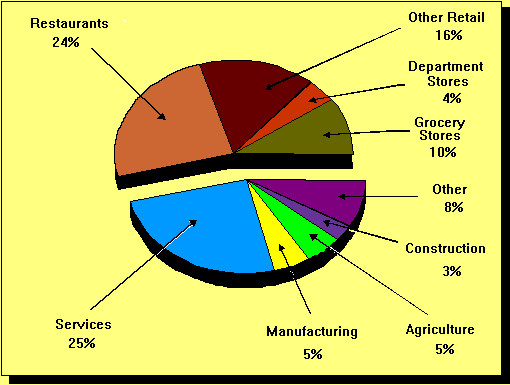
Types of jobs held by youths in
1990. (Data from Children's Safety
Network) |
|
|
Girls of 9 Work as Sex Slaves |
|
|
Ghana - a six-year-old Mark
Kwadwo rescued from forced labour [source] |
|
|
Benin - Three enslaved children
(photo: ESAM/Anti-Slavery International) |
|
|
A child works at a carpet loom
in Lahore, Pakistan |
|
|
Boy car mechanic [Images of
Child Labor, Madras, 1997 by Usha Kris] |
|
|
Boy mechanics fixing bikes [Images
of Child Labor, Madras, 1997 by Usha Kris] |
|
|
Boy vendor on bike cart [Images
of Child Labor, Madras, 1997 by Usha Kris] |
|
|
Children at work - ©AP Photo |
|
|
Bolivian children earn a meager
living by fishing Lake Titicaca |
|
|
Boys cleaning new carpets in
Fayum, Egypt |
|
|
Mauritanian girls weave a straw
rug |
|
|
Young boys carrying bricks at a
construction site to earn a living in New Delhi |
|
|
Young boy carrying bricks |
|
|
Columbia boy shifts through
trash for items of value to sell |
|
|
Children selling handicrafts in
Bangkok, Thailand |
|
|
Boy carrying a basket |
|
|
Burmese girls haul bricks at
construction site in Rangoon |
|
|
Child labor in the mines. The
Warder Collection. |
|
|
Children in rural areas of
Honduras are often forced to leave school to work in the fields |
|
|
Eleven-year-old Carlos Alberto Flete
looks back out of the entrance to the La India gold mine as he enters to go
to work, 113 miles north of Managua, November 15, 2004 |
|
|
Twelve-year-old Junior Calderon
walks toward the entrance of the La India gold mine as leaves to fetch water
for his fellow workers, 113 miles north of Managua, November 15, 2004 |
|
|
Fishing boys drawing nets under
the supervision of a "slave master." Photograph by Jean-Philippe Chauzy ©2003 by the International Organization
for Migration (IOM) |
|
|
Electroplate Worker (Photo: David Parker) |
|
|
Hazardous and exploitative forms
of child labor |
|
|
Hazardous and exploitative forms
of child labor © International
Labor Organization/ J.M. Derrien |
|
|
Hazardous and exploitative forms
of child labor ©
International Labor Organization/J. Maillard |
|
|
Girl selling bags of water
Libreville, Gabon © Mike
Sheil/Black Star |
|
|
Family group with child domestic
worker, Oueme Region, Benin © Mike
Sheil/Black Star |
|
|
Child soldier with weapon |
|
|
Nine year old Tamba was under
command of local militia in Sierra Leone, 2001 |
|
|
Lineup - Photo from The
Coalition to Stop the Use of Child Soldiers- 2002 |
|
|
A thirteen-year-old girl is held captive
by the FARC leftist guerilla in La Plata, Colombia - 7/2002. © Getty Images |
|
|
Children in a Philippine
shantytown with militia presence ©
International Labor Organization/P. Deloche |
|
|
Women forced laborers under Nazi
rule |
|
|
Video -
Combating the Trafficking in Human Beings |
|
|
U.S. Secretary of State Colin
Powell holds a copy of report on human trafficking |
|
|
Organ in a Bag – Taking children
abroad to sell their organs |
|
|
Bedona Begum of Narayanganj
cannot hold tears as she found her son Alam at a shelter home in Dhaka after
seven years. Photo: AKM Mohsin |
|
|
Cote d’Ivoire - Drissa attempted
to escape, but the slaveholder caught him and savagely beat him. He still has the scars from those beatings |
|
|
Joseph's burned legs after being
nailed to a board by his master and left for dead. He was a 7-year old Sudanese Dinka boy when
he had been sold into slavery - Credit: Persecution Project Foundation |
|
|
Joseph's back bears the scars of
his beatings |
|
|
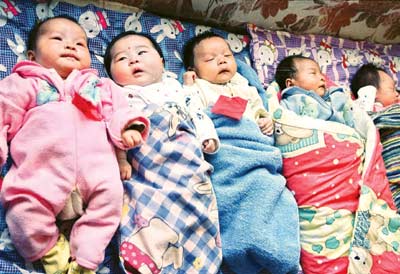
Children rescued from a baby trafficking
gang that took 21 babies from Xuanwei, Yunnan Province, and sold them in
Hebi, Henan Province. [newsphoto/file] |
|
|
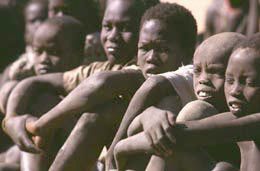
Sudanese slaves await redemption in
Madhol, Sudan, in December 1997. An Arab trader sold 132 former slaves, women
and children, for $13,200 (in Sudanese money) to a member of Christian
Solidarity International. [AP Photo] |
|
|
Poster - People
for Sale in Canada? The Answer will
Shock You |
|
|
Afghanistan - Destitute Afghan
children fall prey to traffickers ©IRIN |
|
|
Afghanistan - A large number of
Afghan children have fallen victim to traffickers ©IRIN |
|
|
Poster – Jamaica
… “Sold” |
|
|
Poster – Today’s
fight for tomorrow’s freedom |
|
|
This woman in her early 20s was
trafficked into a blue jean sweatshop, where she and other young women were locked
in and made to work 20 hours a day, sleeping on the floor, with little to eat
and no pay. [photo by Kay Chernush for
the U.S. State Department] |
|
|
Burmese migrants who are often
trafficked onto fishing ships are kept at sea for months and even years at a
time. If they protest and ask to be put ashore, they may be threatened at
gunpoint and locked in containers, or fired and not paid for their work. [photo by Kay Chernush for the U.S. State
Department] |
|
|
A 9-year-old girl toils under the
hot sun, making bricks from morning to night, seven days a week. She was
trafficked with her entire family from Bihar, one of the poorest and most
underdeveloped states in India, and sold to the owner of a brick-making
factory. With no means of escape, and unable to speak the local language, the
family is isolated and lives in terrible conditions. [photo by Kay Chernush for the U.S. State
Department] |
|
|
Human trafficking involves the
use of force, fraud, or coercion to enslave a person. Sometimes traffickers use
a bond, or debt, to keep a person trapped. Many workers around the world fall
victim to debt bondage when they assume a debt as part of their employment,
or inherit debt in more traditional systems of bonded labor. Especially in
South Asia, people can be trapped in debt bondage from generation to
generation. [photo by Kay Chernush for
the U.S. State Department] |
|
|
Carpet weavers like this family
are usually Dalits or "Untouchables," the lowest caste in South
Asian society. In many instances, the children are helping a family member,
or someone else in their village who has fallen into debt. An offer is made
to place a loom in their hut so they can pay off their debt, but this only
ensures their enslavement, sometimes for generations. [photo by Kay Chernush for the U.S. State
Department] |
|
|
Before being rescued by an Indian
non-governmental organization affiliated with Free the Slaves, most of these
children were forced to work on carpet or sari looms from morning to night.
Some were bonded and some were born to bonded laborers who had received an
"advance" against their birth. Initially fearful and withdrawn, the
children have blossomed in the protected environment of this special
school. [photo by Kay Chernush for the
U.S. State Department] |
|
|
Young men sew beads and sequins
in intricate patterns onto saris and shawls at a "zari" workshop in
Mumbai, India. The boys, who arrive by train from impoverished villages
across India, often work from six in the morning until two in the morning the
next day. Some sleep on the floor of the workshop. If they make the smallest
mistake, they might be beaten. All say they work to send money back to their
families, but some employers are known to withhold their meager pay. [photo by Kay Chernush for the U.S. State
Department] |
|
|
Street kids, runaways, or
children living in poverty can fall under the control of traffickers who
force them into begging rings. Children are sometimes intentionally
disfigured to attract more money from passersby. Victims of organized begging
rings are often beaten or injured if they don't bring in enough money. They
are also vulnerable to sexual abuse.
[photo by Kay Chernush for the U.S. State Department] |
|
|
This brothel keeper and her
slaves are in a red-light district in Mumbai, India. The women and girls used
in prostitution may be exploited 10 to 40 times a night, sometimes keeping as
little as 20 rupees (less than 50 cents) per encounter. The Madam takes the
biggest cut for herself, then pays the landlord, the pimps, and her
"protectors." Government corruption is one of the driving factors
behind the burgeoning trade in human beings.
[photo by Kay Chernush for the U.S. State Department] |
|
|
At Mumbai's central train
station, young boys like this one arrive daily from rural India thinking they
will find work in order to send money home, but the boys often fall prey to
unscrupulous traffickers and corrupt officials. [photo by Kay Chernush for the U.S. State
Department] |
|
|
A Roma (gypsy) child finds
herself on the side of a road in northern Italy, ironically wearing a shirt
that proclaims, "Outsider." Her family, which fled the ethnic
turmoil in Bosnia, is always on the move. Poverty, discrimination, and social
customs combine to make Roma children vulnerable to trafficking. [photo by Kay Chernush for the U.S. State
Department] |
|
|
UK - Life of despair: foreign
girls are being lured to Scotland under false pretences, held captive and
forced to work as prostitutes under threat of violence if they do not comply.
Many are sold on over and over again for around £7,000 a time. [Photograph: Robert Perry] |